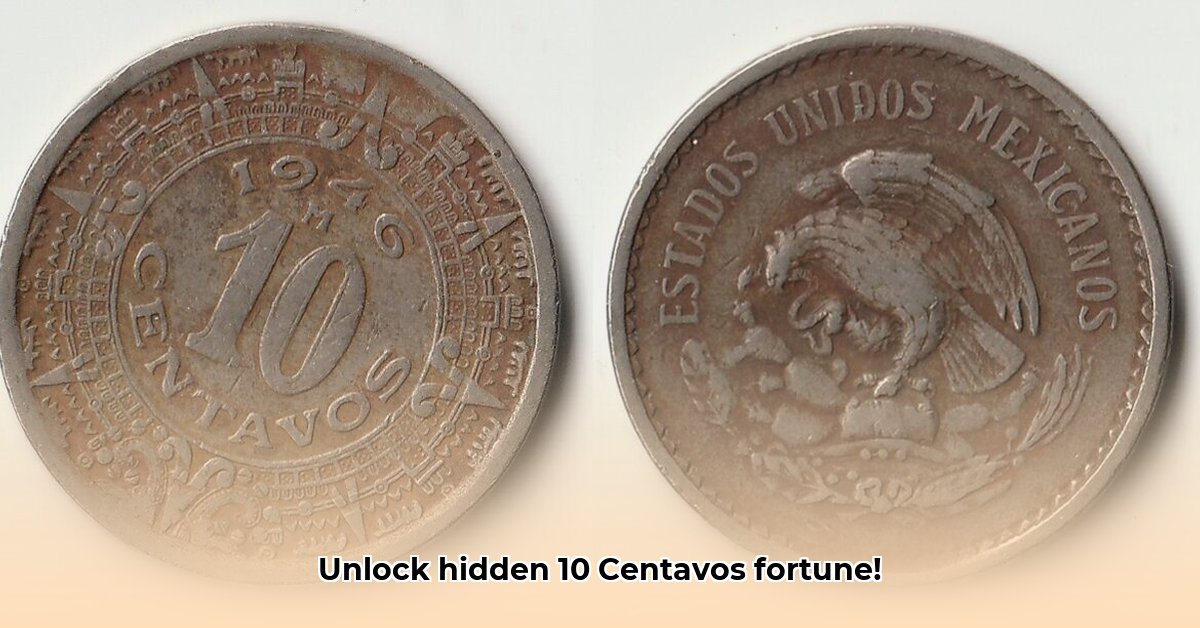
Understanding the Value of Your 1936-1946 Mexican 10 Centavos Coin
Have you unearthed a 1936-1946 Mexican 10 Centavos coin and are curious about its worth? Online valuations can be deceptive, as the true value hinges on several critical factors beyond just the year of minting. This guide provides actionable steps to accurately determine its value, catering to both novice collectors and seasoned numismatists. We'll cover everything from authentication to market analysis, empowering you to make informed decisions. For more information on Mexican coin values, check out this helpful resource: Mexican Coin Values.
Understanding Price Volatility: More Than Just a Year
The value of your 1936-1946 Mexican 10 Centavos coin isn't a fixed number; it fluctuates based on several key factors. Think of it like the stock market—prices rise and fall based on demand.
- Rarity: How many coins from this specific period exist? Lower mintage numbers generally translate to higher values. But remember, certain varieties within the 1936-1946 period might be rarer than others.
- Condition: A coin in pristine condition commands a far higher price than one exhibiting wear. Scratches, dents, and discoloration significantly impact value.
- Market Demand: Collector interest plays a large role. Increased demand translates to higher prices, while decreased interest leads to lower values. This is why relying solely on online averages is often inaccurate. These averages don't capture the complexities of specific conditions and market shifts.
Isn't it surprising how much more there is to consider than simply the year of minting?
Assessing Coin Condition: The Sheldon Scale and Beyond
Professional numismatists use standardized grading systems, primarily the Sheldon Scale (1-70), to assess a coin's condition. A higher grade indicates better condition and therefore, higher value. For example, a coin graded MS65 (Mint State 65) is considered exceptional, while a VF20 (Very Fine 20) shows significant wear.
Examine your coin meticulously. Note any scratches, dents, toning (subtle color variations), or evidence of cleaning. Comparing your coin to images of professionally graded coins online can be invaluable. The more precise your assessment of its condition, the more accurate your value estimation.
Researching Current Market Value: Beyond Online Averages
Online resources are helpful starting points, but they shouldn't be your sole source. Online averages often fail to reflect the nuances of individual coin conditions and recent market trends. For a more accurate valuation:
- Explore Auction Results: Analyze recent sales of similar coins on specialized auction sites. This reveals real-world transaction prices, providing a more accurate reflection of current market value.
- Consult Reputable Dealers: Check price listings from established coin dealers. Their expertise provides valuable insights into current market trends and pricing nuances.
Remember, averages can be misleading. Focus on individual coin sales to gain a more realistic understanding.
Identifying Authentic Coins: Avoiding Counterfeits
Counterfeit coins are a genuine concern. Before investing heavily, it's wise to have your coin authenticated by a reputable grading service like PCGS (Professional Coin Grading Service) or NGC (Numismatic Guaranty Corporation). This step verifies authenticity and provides a professional grade, significantly impacting the coin's value and minimizing risk.
Buying and Selling Strategies: Maximizing Your Returns
Whether buying or selling, a strategic approach is crucial. Buyers should conduct thorough research, even consulting with experienced collectors for higher-value coins, while sellers should provide accurate descriptions and high-quality images. Transparency and fair negotiation are paramount.
Here's a strategic framework:
- Research: Thoroughly investigate your coin's characteristics before buying.
- Negotiate: Know your coin's worth to negotiate effectively. Use your research to justify offers and counter-offers.
- Reputation: Choose reputable dealers with an established history of fair transactions.
- Tax Implications: Understand any tax implications associated with buying or selling numismatic items in your jurisdiction.
Long-Term Investment Considerations: A Risky but Rewarding Venture
Investing in coins can offer potential long-term appreciation, but it is subject to market fluctuations. Prices can rise and fall, so only invest what you're prepared to potentially lose. Diversification within your collection helps mitigate risk, reducing reliance on a single coin's performance.
Conclusion: Due Diligence is Key
Determining the value of your 1936-1946 Mexican 10 Centavos coin requires diligent research and a nuanced understanding of market forces. By following these steps, you can move beyond misleading online averages and arrive at a more accurate and informed valuation. Remember, knowledge is your greatest asset in this exciting hobby.